Do you know what those smelly little balls that sometimes appear in your throat are? They’re exactly the tiny things most people ignore—until one day the smell becomes so strong and embarrassing that you can’t pretend it’s nothing anymore. Many people think it’s leftover food, sinus drainage, or just a random irritation. But in reality, those little white or yellowish bits have a much deeper explanation, and doctors say they’re one of the most common hidden causes of chronic bad breath.
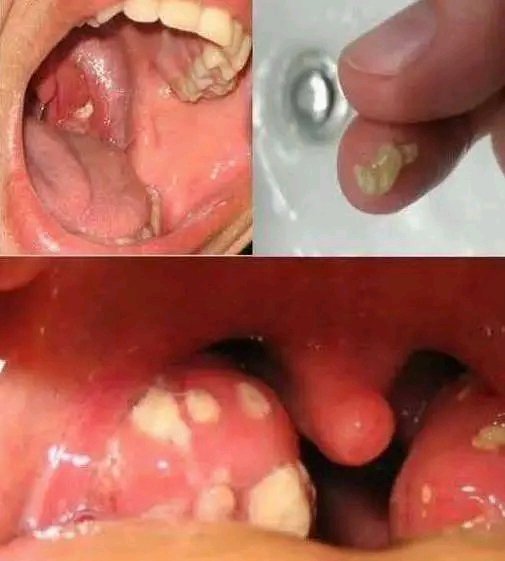
They’re called tonsil stones, and they form quietly in the small pockets at the back of your throat. These pockets trap bacteria, dead cells, mucus, and tiny food particles, slowly compressing them into soft, smelly clusters. Most people don’t even realize they have them—until one suddenly pops out while coughing or swallowing, releasing a strong odor that’s impossible to ignore. Some people mistake them for infections, parasites, or even signs of something dangerous, but the truth is surprisingly simple.
Tonsil stones grow when the tonsils become textured or irritated. Even perfectly healthy people can develop them if they breathe through their mouth, have allergies, or don’t drink enough water. Women tend to experience them more during hormonal shifts, and anyone with frequent sore throats is at higher risk. What makes them so embarrassing is the smell: the combination of sulfur-producing bacteria and trapped debris can make even the smallest stone produce powerful bad breath.
Doctors say most cases are harmless but extremely uncomfortable. The real problem is that many people walk around for months wondering why their breath smells bad, even after brushing, using mouthwash, or chewing gum. They never suspect that something deep in the throat is the cause. And when a stone grows large enough, it can cause ear pain, a scratchy sensation, a metallic taste, or the feeling that something is stuck every time you swallow.
There are safe ways to remove them, but trying to force them out with fingers or sharp objects can cause bleeding and infections. Warm saltwater, better hydration, tongue cleaning, and gentle air-pressure methods help, but severe cases may need medical care. In some rare situations, a doctor may recommend a procedure to smooth the tonsils so stones can’t form at all.
Most people who finally discover what those smelly little throat balls actually are feel relieved… and shocked. They’re not parasites. They’re not signs of disease. They’re simply your body’s way of trapping debris—until the debris grows too big to hide.
And if you’ve ever wondered why your breath sometimes turns unexpectedly bad even after brushing?
This might be the real reason you never knew.
