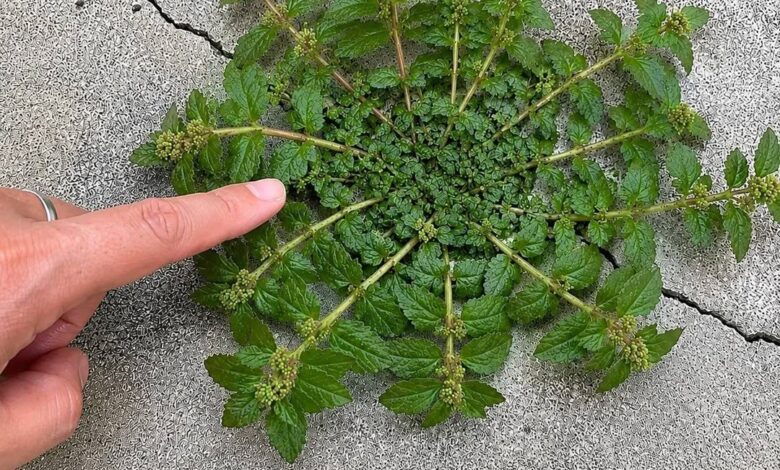
You have likely stepped over this “useless” weed a thousand times without giving it a second glance, unaware that you are trampling on a botanical gold mine hidden in plain sight. While most gardeners scramble to rip it from their flowerbeds and spray it into oblivion, those in the know treat this humble herb with the reverence usually reserved for expensive pharmaceuticals. This isn’t just another common garden pest; it is a legendary, age-old medicinal powerhouse that has quietly saved lives for centuries. If you knew the secret hidden within its tiny, hairy leaves, you would never look at your lawn the same way again.
Known to botanists as Euphorbia hirta and to traditional healers by names like asthma weed, snake weed, and pill-bearing spurge, this plant is a master of disguise. It is a modest, low-growing annual that rarely reaches above your knees, characterized by its reddish-purple stems, serrated opposite leaves, and the tell-tale milky white sap that oozes when a stem is snapped. It is one of nature’s most persistent survivors, thriving in the harshest conditions—from the cracks in your driveway and neglected vacant lots to the edges of tropical forests and sprawling agricultural fields. Its rapid growth and ability to flourish in disturbed soil have cemented its status as one of the most widespread medicinal weeds in the world.
For generations, cultures across Asia, Africa, and the Americas have recognized that this plant is a pharmacy in itself. Traditional practitioners do not see a weed; they see a comprehensive remedy. Nearly every portion of the plant—from the fibrous roots and the hairy aerial stems to the tiny, clustered flowers—is harvested for its potent therapeutic properties. Science is finally beginning to catch up to the wisdom of these ancestral healers, confirming that the plant is teeming with bioactive compounds like flavonoids, tannins, alkaloids, and saponins. These chemical constituents are the backbone of its reputation, acting as the silent soldiers in a long-standing war against inflammation, infection, and respiratory distress.
Perhaps the most famous application of Euphorbia hirta is its legendary ability to quiet the chest. Its nickname, “asthma weed,” was earned through centuries of success in treating chronic respiratory conditions. When patients suffered from the suffocating grip of bronchitis, the wheezing of asthma, or the relentless, hacking rhythm of a chronic cough, healers turned to this plant to provide relief. By boiling the leaves and stems into a warm, soothing herbal tea, they created a decoction capable of relaxing airway muscles and reducing the excess mucus that makes every breath a struggle. For many rural communities without access to modern, high-tech inhalers, this humble tea was the only thing standing between them and a night of breathing terror.
